

Blog
Decision Intelligence insights, structured thinking frameworks, and best practices for organizations that take their decisions seriously.

How to Avoid Groupthink: Build Structured Dissent Into Every Decision
Groupthink is a failure of structure, not intelligence. Here is what groupthink is (Janis), why it happens, the classic countermeasures — devil’s advocate, red teams, anonymous input, decision records — and why argument mapping makes dissent the default.

Async Decision-Making for Remote Teams: Decide Without the Meeting
For a distributed team, the live decision meeting is a tax someone always pays across timezones. Here is why remote teams need async decisions, the five-step async decision playbook, the pitfalls that quietly break it (drift, silence-as-consent, no record), and which decisions to keep synchronous.

Decision Fatigue in Teams: Why Your Last Decision of the Day Is Your Worst
By the end of a long meeting, a team rubber-stamps, defaults, and defers. That is decision fatigue. The everyday pattern is real; the "willpower is a battery" story behind it is scientifically contested. Here is how it shows up in teams, what causes it, and the structural remedies that actually help.

How to Get Stakeholder Buy-In: Stop Selling the Decision, Show the Reasoning
Stakeholders do not resist good decisions — they resist decisions they cannot see the reasoning behind. Here is what actually builds buy-in: involve people early, make the reasoning transparent, show their input was weighed even when it was not adopted, and keep a trail they can return to.

From Survey Results to a Decision: Closing the Gap Engagement Tools Leave Open
A survey gives you data, not a decision. After a Thoughtexchange, Lattice, or Gallup exercise you still have hundreds of open-ended responses to synthesize, weigh, decide on — and defend. Here is a five-step method to get from responses to a defensible choice, and how an audit trail turns participation into an outcome you can show stakeholders.

Engagement Survey Alternatives: 5 Ways to Actually Hear (and Act on) Your Team
The annual engagement survey is a lagging, closed-question snapshot that rarely leads to action. Here is an honest roundup of the alternatives (open-ended exchanges like Thoughtexchange, continuous listening tools, town halls, focus groups, and structured deliberation), what each does well, where each falls short, and how to move from listening to a recorded decision.
How to Extract Decisions From Meeting Transcripts (Not Just Summarize Them)
Your meeting tool already gives you a transcript and a tidy summary — but neither is a record of what you decided. Extracting decisions means pulling out the decision, the options considered, the arguments for and against, and the owner. Here is why a summary is not a decision record, and how AI extraction turns a transcript into a structured pro/con map with a human in the loop.
Critical Thinking Tools: 8 Techniques That Build Sharper Reasoning
Critical thinking is a learnable skill, not a talent — and there is a toolkit for building it. A fair roundup of eight tools and techniques (argument mapping, structured debate, the Toulmin model, Socratic questioning, steelmanning, fallacy awareness, pro/con analysis, and decision matrices), what each is good for, and how software turns them into everyday habits.
Discussion Board Alternatives: What to Use Instead in Online Courses
The threaded discussion board is the LMS default — and almost everyone finds it lifeless. It is linear so it has no shape, "post once, reply twice" rewards box-ticking, and quiet students get buried. Here is why it underperforms, a fair roundup of the real alternatives (argument mapping, live polling, social annotation, structured debate) with honest pros and cons, and how a structured argument map fixes the core problem.
The AI Decision Audit Trail: Recording What the AI Recommended and What a Human Decided
As AI shapes more of the decisions organizations make, a model log is no longer enough. An AI decision audit trail records what the AI recommended, what evidence it surfaced, what a human decided, and why — with timestamps. Here is why AI-influenced decisions need to be auditable, what the trail should capture, and how a human-in-the-loop approach keeps the reasoning inspectable.
The Best AI Decision-Making Tools for Teams (An Honest Roundup)
"AI decision-making tool" covers everything from meeting-note bots to apps that just decide for you. This is an honest, category-by-category map — AI-assisted vs automated, what to look for (human-in-the-loop, reasoning capture, auditability, integration), and the strengths and limits of each type, including where Argumentree fits.
Action Item vs. Decision: Why Your Meeting Notes Capture the Wrong Thing
An action item is what to do next; a decision is what the group chose and why. Task tools and meeting minutes capture the tasks and drop the decision plus its reasoning — so teams re-litigate settled questions months later. Here is the difference, what a real decision record captures, and why the decision (not the task) is the durable asset.
Meeting Minutes vs a Decision Log: Why One Rots and the Other Is Your Institutional Memory
Meeting minutes are a chronological transcript of what was said — long, buried, and rarely re-read. A decision log is a short, queryable record of what was decided and why. Here is the difference, when you still need minutes, and how a decision log becomes the memory that stops your team re-opening settled questions.
Consent vs. Consensus: Two Decision Rules People Keep Confusing
Consensus and consent sound like synonyms, but they are two genuinely different group-decision rules — and confusing them is why so many groups feel stuck. Consensus needs everyone to actively agree; consent (from sociocracy and Sociocracy 3.0) means a proposal passes unless someone raises a reasoned, paramount objection. Here is the precise difference, where each one shines and fails, and how structured argument mapping keeps consent fast and consensus honest.
How to Document Decisions So They Actually Stick (and Stop Getting Re-Argued)
An undocumented decision does not stay decided — it gets silently reopened and re-litigated, burning hours and eroding trust. This practical how-to covers why to document decisions, the seven fields every decision record needs, a copy-ready template, ADR-style practices, the common mistakes, and how to capture the reasoning, not just the outcome.
The 4 Phases of a Productive Debate (and the 10 Rules That Keep It Fair)
Most debates fail before anyone makes a point — because nobody agreed on what was being argued. Argumentation theory has a fix: a four-phase structure (confrontation, opening, argumentation, conclusion) and ten rules for good-faith disagreement, from the pragma-dialectical model. Here is how to run a debate that actually reaches a decision.
How to Make Better Decisions: The Science, the Biases, and the Frameworks That Actually Work
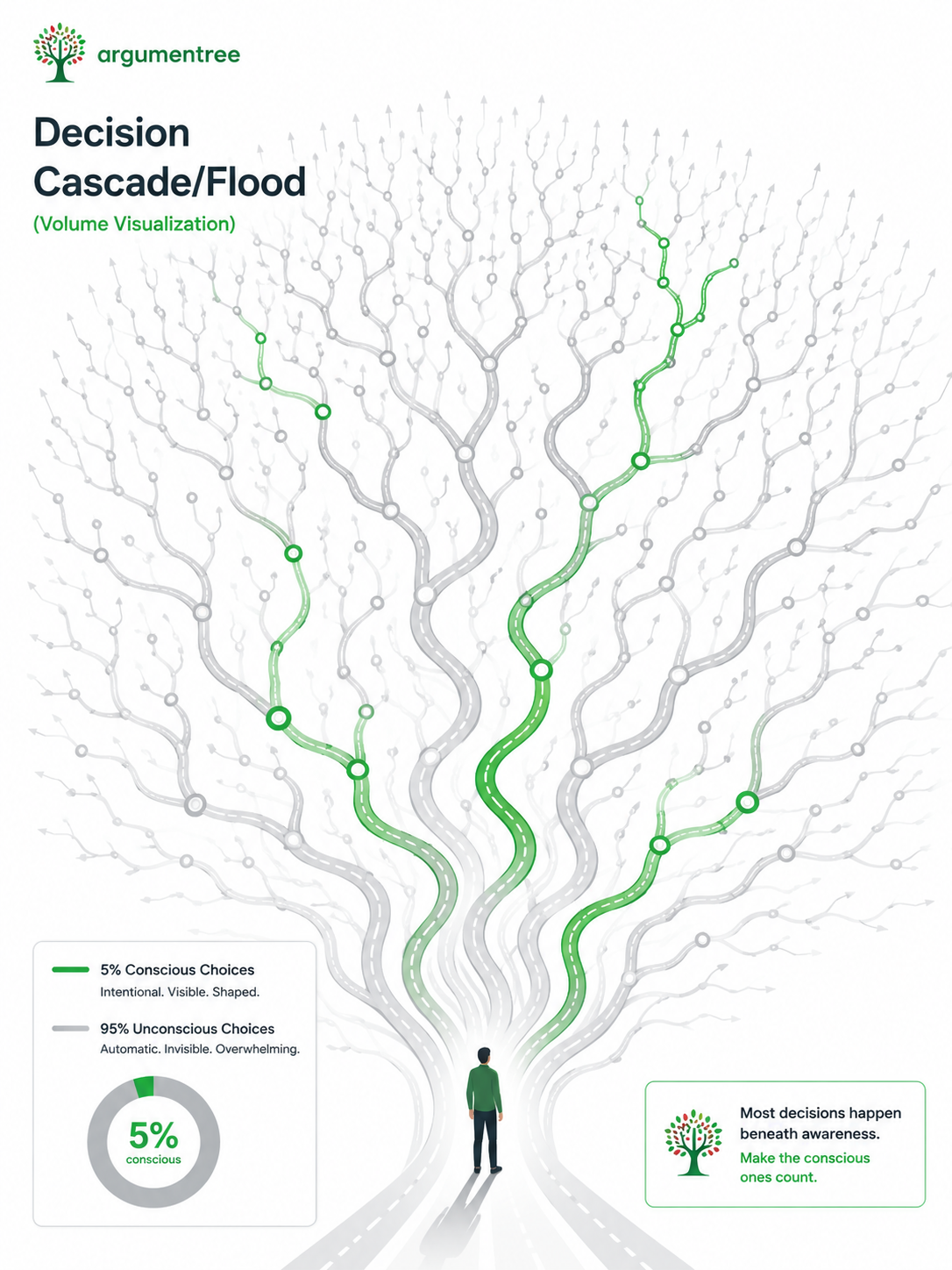
Most of your choices run on autopilot — fast, automatic, and shaped by cognitive biases you never notice. This comprehensive guide covers how decisions actually happen in the brain, the biases that sabotage them, decision fatigue, and the proven frameworks (Bezos Type 1/2, SPADE, Pre-Mortem, Eisenhower) that measurably improve outcomes.
The Meeting Intelligence Revolution: Turning Meetings Into Traceable Decisions
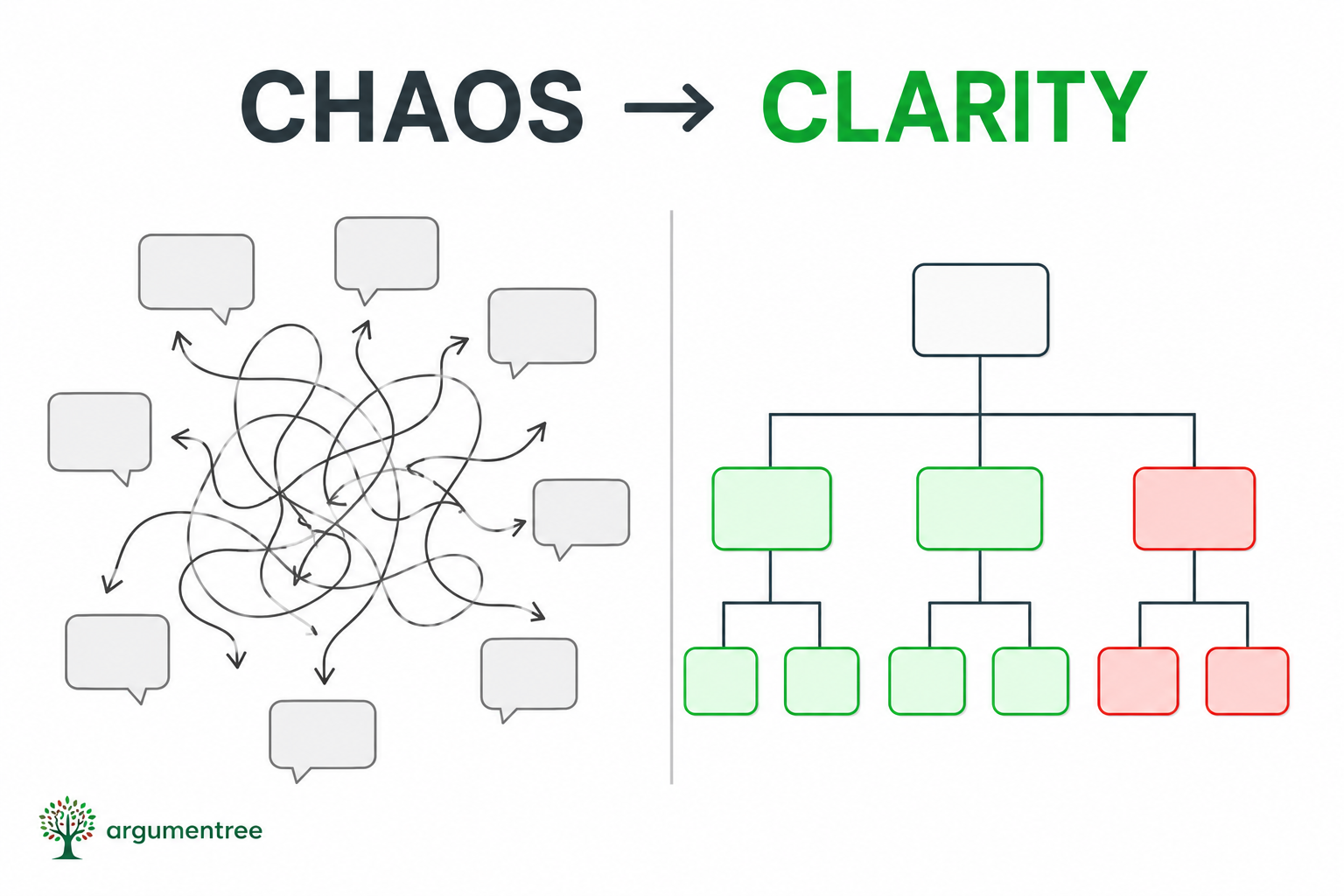
Tired of meetings where people talk without saying anything? Learn how to transform wasted meeting time into focused, efficient decisions with pre-meeting argument preparation, real-time rating, and full decision traceability — grounded in the published research on meeting waste.
Collaborative Decision Making: 240 Years of Proof That Groups Beat Individuals
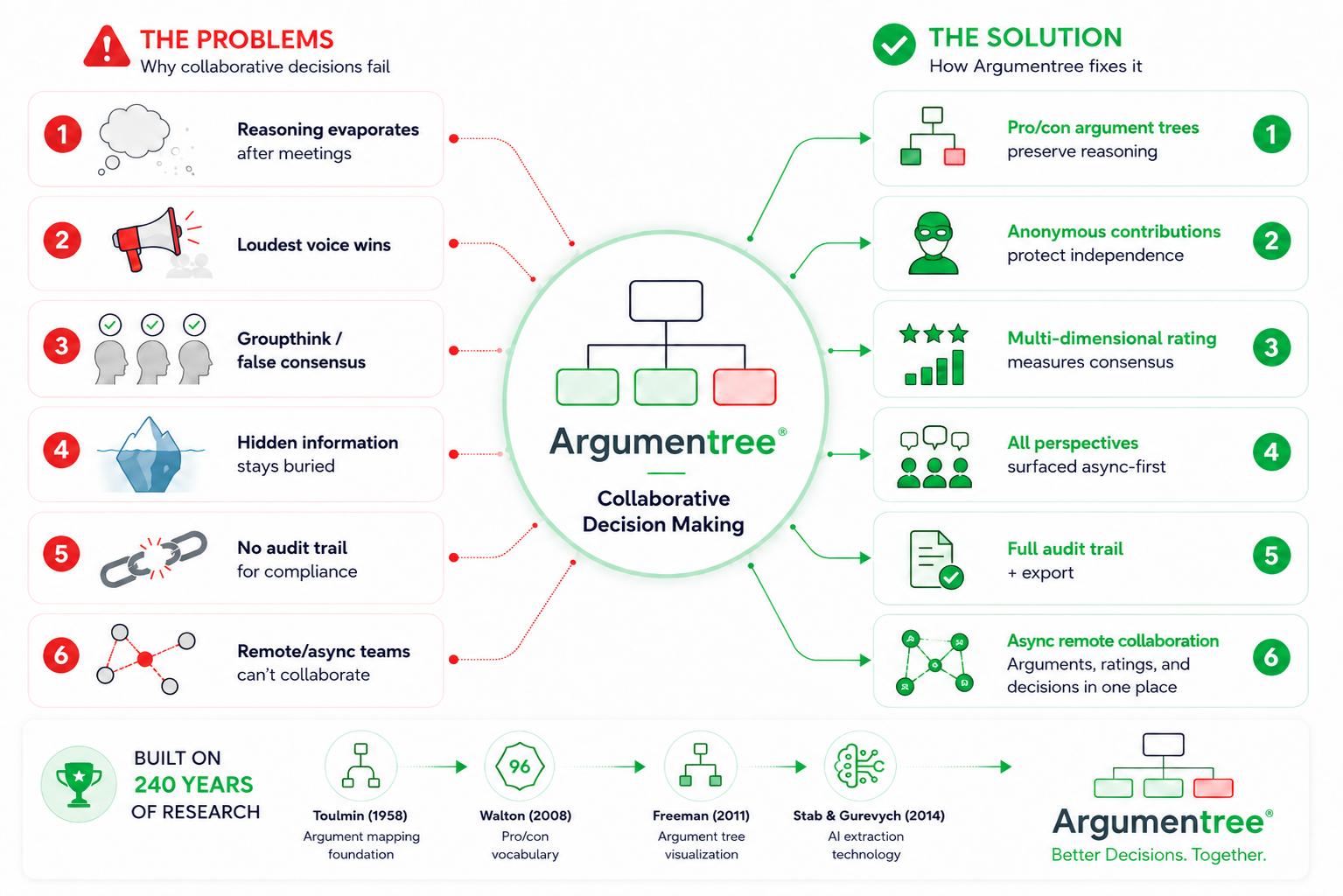
In 1785, Condorcet proved mathematically that groups outperform individuals when perspectives are properly aggregated. Google's Project Aristotle confirmed it: psychological safety predicts team effectiveness better than who's on the team. Here's what the science says — and when NOT to collaborate.
Decision Intelligence: From Data to Action at Enterprise Scale
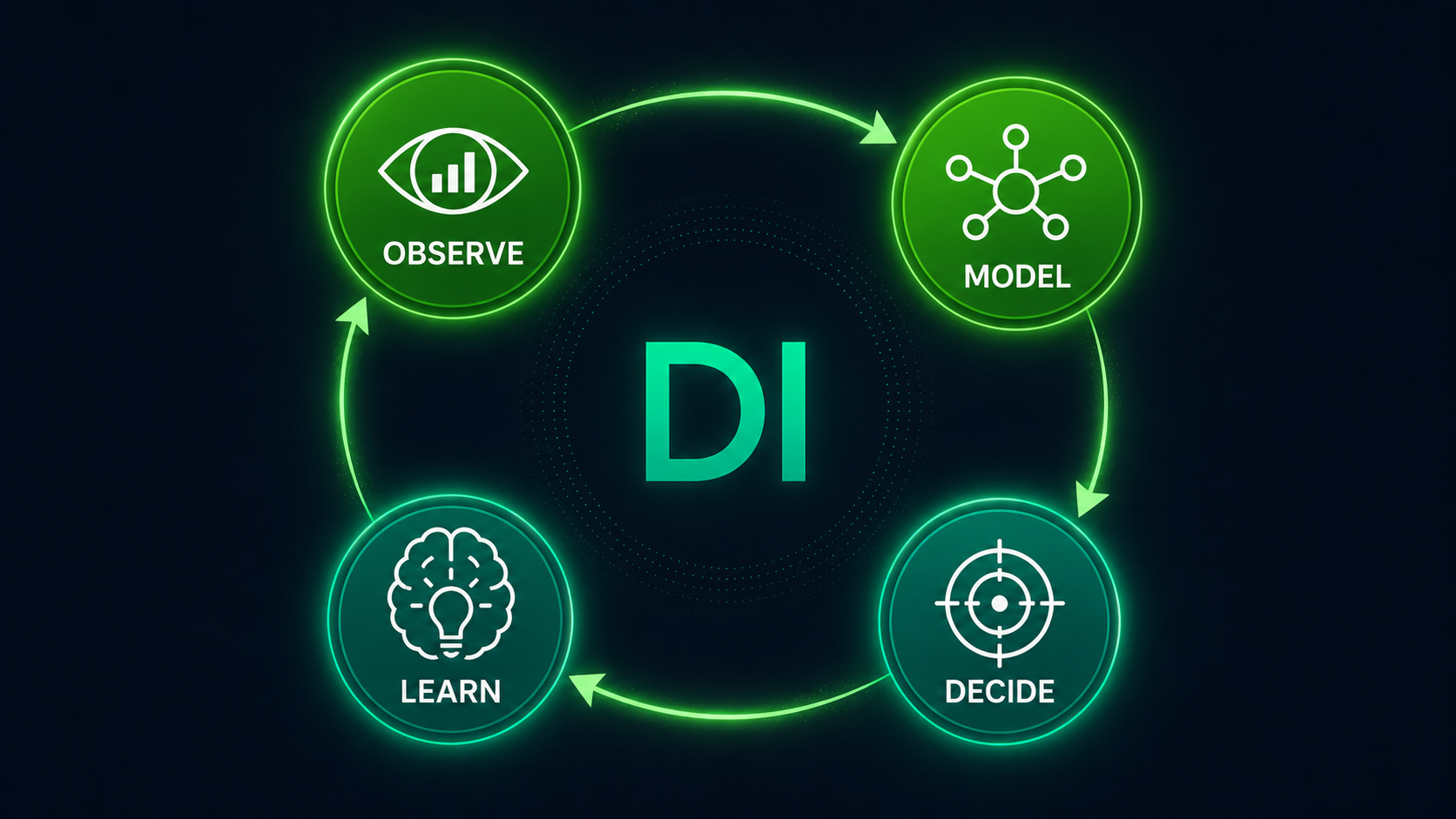
In 2018, Google created a new job title: Chief Decision Scientist. Why? Because having data isn't the same as using data well. Decision Intelligence — coined by Lorien Pratt, operationalized by Cassie Kozyrkov — closes the gap between insight and impact. Here's the framework behind the $68B market.
Jeff Bezos's 3 Decisions a Day: The Warren Buffett Method Behind Amazon
In 2018, Jeff Bezos revealed his decision-making philosophy: "You get paid to make a small number of high-quality decisions." He credits Warren Buffett's approach. Here's the full interview, the 10am rule, and why "gut decisions" aren't what you think.
Warren Buffett's Decision Philosophy: The 20-Slot Punch Card That Built $900 Billion
Jeff Bezos credits Warren Buffett for his decision philosophy. But what does Buffett himself actually say? His 20-slot punch card rule, Ted Williams sweet spot analogy, "lethargy bordering on sloth," and why he reads 500 pages a day. The real philosophy behind $900 billion.
Elon Musk's $100 Million Decision Hour: The Lex Fridman Clip Every CEO Should See
In a recent Lex Fridman conversation, Elon Musk did the math out loud: "The marginal value of a good decision can easily be, in the course of an hour, a hundred million dollars." Bezos counts decisions per day. Buffett reads 500 pages to prepare. Musk prices the hour. Here's why the number isn't bravado—and what it means for every organization at every scale.

Sam Altman's WHAT vs HOW: The 5% of CEO Time That Actually Matters
Sam Altman breaks the CEO job into two parts: 5% figuring out WHAT to do, 95% making sure it gets done. Most people want the strategic part—it's the fun part. But the real job is the repetitive 95%. As AI handles more execution, humans must focus on the WHAT: direction, values, tradeoffs.

The Paradox of Choice: Why You Can't Make the Decision That Matters
A donkey starved to death between two identical haystacks. 700 years later, your team is doing the same thing with quarterly strategy. The jam study showed we buy less when given more options. Netflix users spend ~18 minutes choosing—then watch nothing. Decision paralysis isn't weakness. It's evolution working against you.

The Decision Theorist Who Co-Founded AI: How Herbert Simon's Christmas Thinking Machine Changed Everything
In 1956, Herbert Simon told his students he had "invented a thinking machine" over Christmas break. The same ideas that won him the Nobel Prize in Economics also won him the Turing Award—and shaped modern AI.

Stop Searching for the Perfect Decision. Nobel Prize Research Says "Good Enough" Wins.
Your team spent 3 months evaluating vendors. They're still not sure they picked the best one. Herbert Simon's Nobel Prize-winning research explains why—and why "good enough" decisions made faster usually outperform "perfect" decisions made too late.

Herbert Simon Won a Nobel Prize for Proving You Can't Make Perfect Decisions. Here's What to Do Instead.
In 1978, Herbert Simon won the Nobel Prize for a radical idea: humans are incapable of perfectly rational decisions. His theory of "bounded rationality" and "satisficing" changed economics, AI, and organizational theory forever—and explains why your meetings keep failing.

DAO Governance Best Practices: From Chaos to Consensus
A complete guide to implementing transparent, structured decision-making in decentralized organizations. Learn from Polkadot, Cardano, and EVM ecosystem leaders.

AI Decision Tracing: The Missing Link in Enterprise AI Compliance
Why regulated industries are demanding full audit trails for AI decisions—and how graph-based systems solve the "AI black box" problem once and for all.

12 Cognitive Biases Killing Your Strategy (Real Corporate Disasters Included)
Anchoring bias cost Nokia its smartphone future. Sunk cost fallacy trapped Kodak for a decade. Here are 12 cognitive biases that silently sabotage corporate strategy—and the structured frameworks that neutralize them.

Amazon Banned PowerPoint. Google Has a Memo Rule. What Does Your Company Do?
Jeff Bezos outlawed PowerPoint in 2004. The result? Cleaner thinking, better decisions, and a $2 trillion company. Here's why the world's most successful companies reinvented how they think in meetings—and the common thread behind all of them.

The Amazon 6-Pager Has a Problem. Here's What Comes Next.
Jeff Bezos didn't demand analysis paralysis. He demanded clarity of reasoning after decisions. But the 6-pager format has real accessibility issues—reading speed, neurodiversity, learning styles. The principle was right. The implementation needs an upgrade.

When Your Best Employee Quits, You Don't Lose a Person. You Lose $47 Million.
Every time a senior employee leaves, companies lose an average of 3.5x their salary in institutional knowledge—decisions made, reasoning archived, relationships built. Most organizations have no system to capture it. Argumentree does.

The Steel Man: Why the Best Negotiators Argue Against Themselves First
Strawmanning — attacking a weakened version of your opponent's argument — is the most common intellectual mistake in business. Steelmanning — building the strongest possible opposing argument before you engage — is the technique used by top negotiators, Supreme Court lawyers, and the most respected CEOs. Here's how to use it.

The AI Accountability Gap: When Algorithms Make Million-Dollar Mistakes, Who's Responsible?
In 2023, a US bank's AI system denied 89% of loan applications from Black applicants while approving similar profiles from white applicants. The algorithm had no audit trail. Nobody knew how it decided. This is the AI accountability gap—and regulators are coming for it.

How McKinsey, Bridgewater, and Amazon Turn Disagreement Into Decisions (The Protocol)
Most companies treat disagreement as a problem to be managed. The world's highest-performing organizations treat it as a decision-quality asset to be extracted. Here's the exact protocol they use—and how you can implement it in your next meeting.

The Boardroom in 2030: How AI Is Rewriting Corporate Governance Forever
By 2030, most board decisions will be pre-analyzed by AI before any human votes. Decision quality will be auditable. Dissenting opinions will be required documentation. The era of the rubber-stamp board is ending. Here's what's coming—and why it's a fundamental improvement.

Argument Mapping: The Visual Tool That Makes Complex Decisions Obvious
NASA used argument mapping before the Challenger launch. The pro/con structure was there. Nobody had drawn the map. Had they visualized the argument tree, the disaster might have been prevented. Here's how argument mapping works—and why every major decision deserves one.

The 2,400-Year-Old Meeting Technique That Still Beats Every Modern Framework
Socrates invented the most effective group decision tool in history. He had no PowerPoint, no agenda, no AI. Just structured questions that forced the group to surface what they actually knew—and didn't know. Here's why the Socratic method is making a comeback in boardrooms.

Remote Teams Make Worse Decisions. Here's the Data — and the 3-Step Fix.
A Stanford study found distributed teams reach consensus 23% faster but make decisions of significantly lower quality than co-located teams. The reason isn't time zones or communication lag — it's the absence of structured argumentation. Here's what the research shows.

12 Logical Fallacies Hiding in Your Boardroom (With Real Corporate Examples)
The ad hominem attack. The slippery slope. The appeal to authority. These aren't just debating-class concepts—they happen in every board meeting, every quarterly review, every product decision. Here's how to spot them, name them, and counter them professionally.

This Meeting Could Have Been an Email: The $37 Billion Problem We Keep Ignoring
The most relatable workplace meme of the decade isn't just funny—it's a diagnosis. 72% of meetings are ineffective. 252% more meeting time since 2020. Here's the research, the psychology, and how companies like Shopify, Amazon, and Meta are actually fixing it.

Ready to Transform Your Decision-Making?
Join hundreds of organizations using Argumentree to structure arguments, track decisions, and build institutional knowledge.
Start Free 14-Day Trial